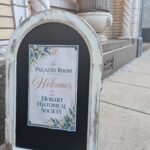
Address
706 E 4th St
Hobart, IN 46342
Phone
219-942-0970
Hours
Monday to Friday: By Appointment
Saturday: 10AM - 12PM
Sunday: Closed

Address
706 E 4th St
Hobart, IN 46342
Phone
219-942-0970
Hours
Monday to Friday: By Appointment
Saturday: 10AM - 12PM
Sunday: Closed

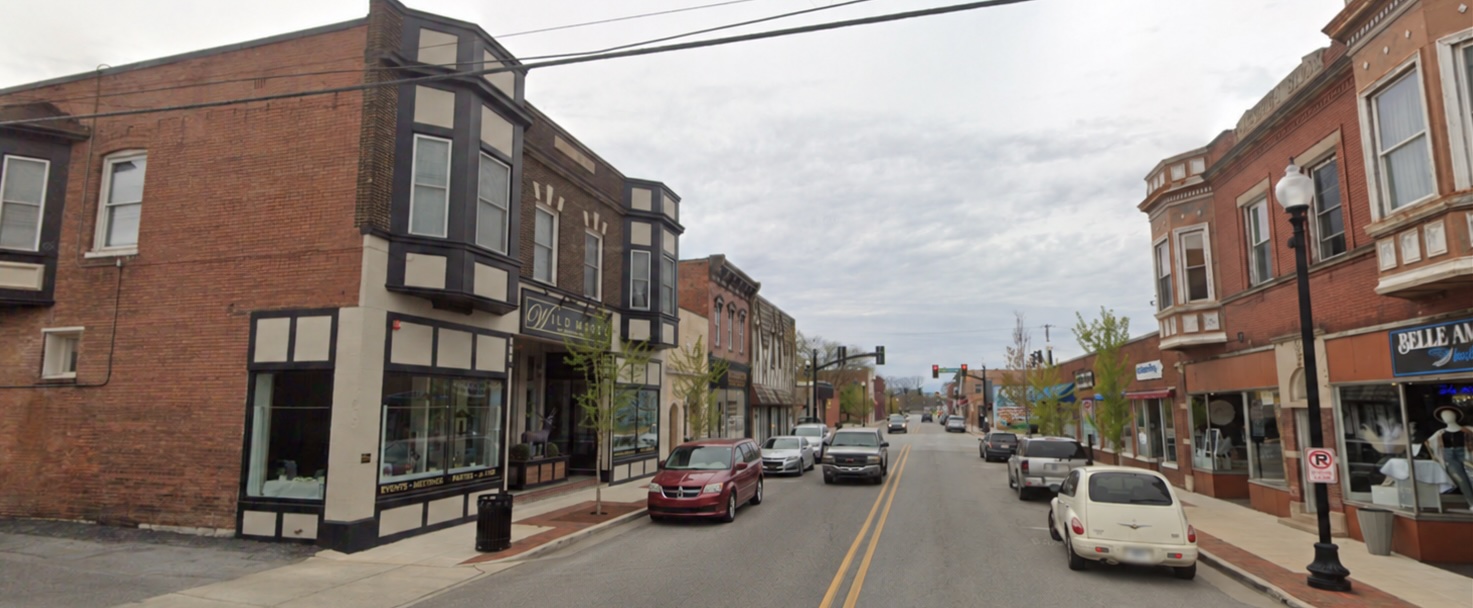
Below are the remarks presented by Tiffany Tolbert at the 2026 Annual Dinner of the Hobart Historical Society.
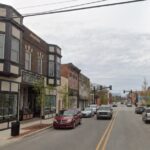
The topic theme was, “Preservation Perspectives: Insights on Preservation in Hobart’s Downtown Lake George Commercial Historic District” and presented during the evening program following dinner.
Learn more about the 2026 Annual Dinner of the Hobart Historical Society.
I’m Tiffany Tolbert, and it is an honor to be with you this evening. I currently serve as Chair of the Hobart Historic Preservation Commission, and professionally, I serve as Co-Director of the African American Cultural Heritage Action Fund and Vice President at the National Trust for Historic Preservation.
Thank you for the invitation to speak this evening, and, more importantly, thank you all for supporting the Hobart Historical Society.
Local organizations like the Hobart Historical Society play a vital role in preserving our communities. They do more than steward important landmarks, such as the Hobart Carnegie Library. They also serve as repositories for the artifacts, stories, photographs, and memories that help us understand where we came from. They give a community a place to gather around its shared history—and, in doing so, help us understand what makes Hobart unique.
My own involvement with preservation in downtown Hobart began during my time with Indiana Landmarks, when I served as Director of the Northwest Field Office.
I remember being alerted to the pending demolition of one of Hobart’s oldest buildings—the former Opera House at the corner of Third and Main Streets.
Unfortunately, the building was ultimately demolished. But the loss of that building had an important and lasting impact. The reaction from the community and city leadership made clear what was at stake when a community does not yet have a preservation strategy in place.
That loss became a catalyst.
What followed was roughly a five-year effort to establish a preservation ethic for the City of Hobart—an effort that ultimately contributed to the creation of the Lake George Commercial Historic District.
That experience taught me something that has stayed with me throughout my career: sometimes it takes the loss of an important place for a community to recognize just how valuable its historic resources are.
Today, I work for a national preservation organization and have the privilege of supporting preservation projects across the country. From that vantage point, it would be easy to think that historic preservation is something that happens in Washington, D.C., New York City, or other major cities.
But the truth is that preservation has always been local.
The foundations of the modern preservation movement were laid by people in communities just like Hobart—people who saw historic buildings being threatened by demolition and decided that those places mattered. They organized. They advocated.
They brought their neighbors together. And they asked their local governments to create tools that would allow communities to have a voice in determining what happens to their historic places.
Much of what we now think of as the preservation system—local historic districts, preservation commissions, design review, landmark designations—grew out of those local efforts.
And that is what the City of Hobart did with the creation of the Hobart Historic Preservation Commission.
The Commission was established by ordinance, with a seven-member board of community representatives charged with helping shape the future of Hobart’s historic resources. Its responsibilities include recommending the designation of local historic districts, developing design guidelines and standards that help preserve the city’s unique architectural character and building traditions, and encouraging thoughtful community and economic development that does not diminish the historic character of the city.
Importantly, economic development was always a priority for Hobart
The growth of historic preservation in the city was never intended to discourage investment or development. Quite the opposite. Downtown Hobart was seen as an opportunity.
Its distinctive historic character created an environment that could support small and locally owned businesses. Its walkability provided opportunities for community events and gathering. And its historic downtown offered something different from the commercial corridors along U.S. 30 and U.S. 6.
In other words, preservation was not viewed as an obstacle to economic development. It was viewed as an economic development strategy.
One of the first demonstrations of that commitment was the creation of the Downtown Hobart Façade Grant Program, in partnership with the Hobart Redevelopment Commission.
I am particularly pleased that this program is still active today, providing matching grants to local property owners and businesses to improve their building facades while maintaining the character of downtown Hobart.
Some of the earliest recipients included Psychic Galley, Cagney’s, and Knight Coin.
Programs like the façade grant are important because they demonstrate that preservation does not have to be an either-or proposition. We can encourage investment while also protecting the character that makes a place special.
In fact, these kinds of incentives can help address one of the greatest threats to historic buildings: not just demolition, but deferred maintenance and alterations that gradually erode the character of a building and, ultimately, the character of an entire district.
When we invest in historic buildings, we are investing not only in the buildings themselves, but in the businesses, neighborhoods, and community life that surround them.
That is the lesson Hobart has been learning for decades—and it is a lesson that remains just as relevant today.
During my time as Chair, the Commission has consistently worked with property owners as they plan and undertake projects throughout the community—from signs and masonry repairs to complete building rehabilitations.
Historic preservation commissions and ordinances are sometimes viewed as a hindrance or a roadblock to progress. But Hobart’s local preservation ordinance is intended to be anything but that.
While the ordinance is regulatory by design, its purpose is to provide a framework for thoughtful decision-making—one that helps property owners, the Commission, and the community balance individual investment with the collective value of preserving Hobart’s historic character.
Ultimately, the ordinance is a tool.
It is a tool to ensure that the benefits of historic preservation are not limited to those of us living here today but are also experienced by future generations of Hobart residents and by those who come to visit, work, and invest in our community.
That is the real value of local preservation. It gives a community the ability to make intentional decisions about what it wants to carry forward—and to ensure that the historic character that makes Hobart special remains an asset for generations to come.
As I close, I want to return to something I mentioned earlier: preservation is a local issue, and it has always been driven by local people.
Many of you may have noticed in the news that historic preservation is facing one of its greatest challenges in more than half a century.
Across the country, the systems and policies that have helped communities protect their historic places and tell their stories are being challenged. In our nation’s capital, the regulatory framework for preservation is being dismantled in ways that could fundamentally change the physical character of Washington without the level of public input that has traditionally been required.
At the same time, federal funding for preservation and cultural heritage programs is being reduced or restricted, limiting the ability of communities to determine how their history is preserved, interpreted, and shared.
These developments matter—not simply because of what happens in Washington, but because decisions made at the federal level can have a profound impact on communities like Hobart.
But there is also an important lesson in Hobart’s own history.
The preservation of Hobart was not created in Washington.
It did not begin with a federal mandate.
It began with people in this community recognizing that their history mattered—and deciding to do something about it.
It began with a building that was lost, and with a community asking what could be done to ensure that the next important place would not be lost.
It led to the creation of a preservation commission, a historic district, design guidelines, incentive programs, and, ultimately, a stronger understanding that preservation and economic development can work together.
That is the power of local preservation.
And that is why the work of the Hobart Historical Society, the Historic Preservation Commission—and the support of everyone in this room—is so important.
At a time when so much about preservation may feel uncertain, we should remember that preservation has never depended solely on what happens at the federal level.
It depends on communities.
It depends on people who care enough to learn the history, save the photographs, tell the stories, maintain the buildings, support local businesses, serve on commissions and boards, and speak up when something important is at risk.
The future of preservation will ultimately be determined not only by what happens in Washington, but by what communities like Hobart choose to value and protect.
So tonight, I encourage all of us to continue doing what Hobart has done so well: know your history, invest in your historic places, support the organizations doing this work, and make sure that the next generation has the opportunity to understand and experience the places that tell the story of this community.
Because preservation is not simply about saving the past.
It is about making sure that the history of Hobart remains part of its future.
Thank you.
Tolbert is co-director of the African American Cultural Heritage Action Fund and vice president at the National Trust for Historic Preservation. In her position she leads the National Grant Program of the Action Fund and its national preservation programs and projects, such as the HBCU Cultural Heritage Stewardship Initiative and Preserving Black Churches and develops preservation strategies for national significate sites associated with African American cultural heritage; such as the Nina Simone Childhood Home, the John and Alice Coltrane Home, the Robert Smalls House and the Emmett Till and Mamie Till Mobley National Monument.
Tolbert previously served as director of the Northwest Field Office at Indiana Landmarks from 2006 2017. Tolbert is a native of Montgomery, Ala., and holds a bachelor of arts degree from Huntingdon College (Montgomery) in political science and history and master of historic preservation from Georgia State University.
She has previously worked for the Alabama Historical Commission’s Black Heritage Council and the Georgia Historic Preservation Division as African American programs assistant. She has also completed consulting work throughout the Southeast, where she completed National Register of Historic Places nominations, state historic marker preparation and conducted research on the role of women in the Civil Rights Movement.
Her preservation expertise includes providing technical assistance to local organizations, advocacy, strategic and preservation planning, historic designation and rehabilitation. Her research on Rosenwald Schools, African American communities and the African American experience in Indiana has been included in multiple publications such as Reflections, a publication of the Georgia Historic Preservation Division and Traces, a publication of the Indiana Historical Society.
Tolbert currently serves on the board of Indiana Humanities and as chairperson of the Hobart Historic Preservation Commission.