Address
706 E 4th St
Hobart, IN 46342
Phone
219-942-0970
Hours
Monday to Friday: By Appointment
Saturday: 10AM - 12PM
Sunday: Closed

Address
706 E 4th St
Hobart, IN 46342
Phone
219-942-0970
Hours
Monday to Friday: By Appointment
Saturday: 10AM - 12PM
Sunday: Closed

A little bit of Hobart history has made its way into the John W. Anderson Archives & Special Collections at Indiana University Northwest in Gary. The papers of Hobart founder George Earle have been researched,
organized, and are now available for individual research.
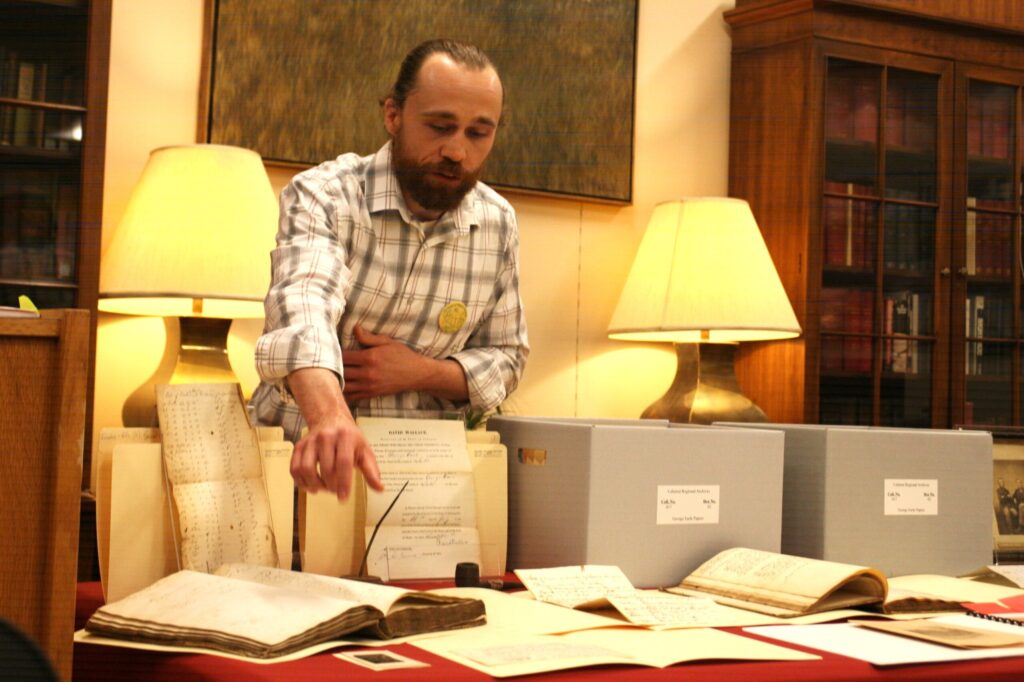
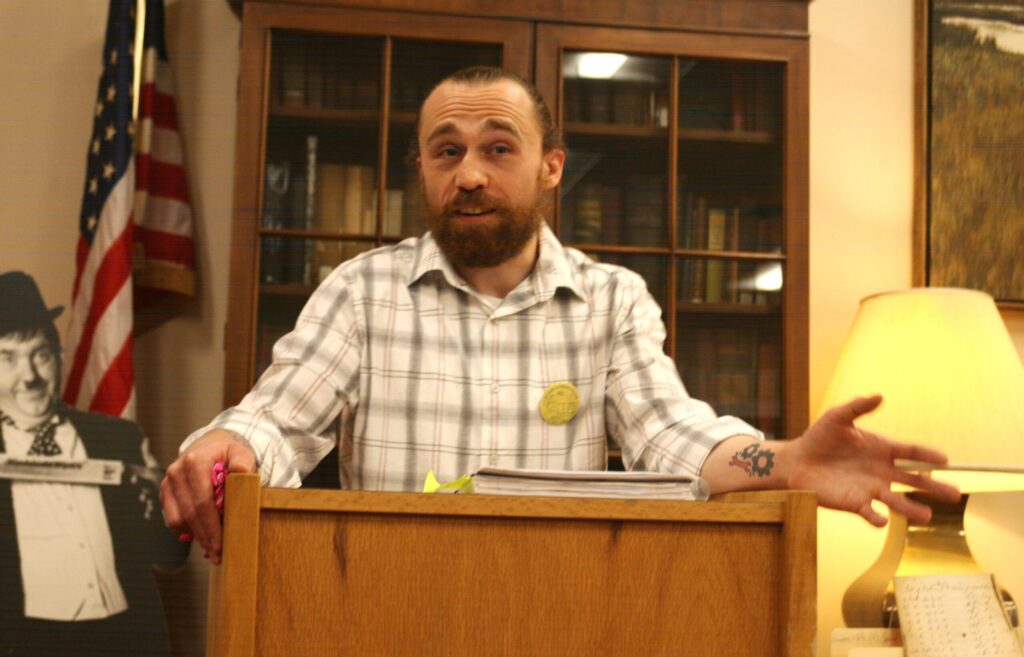
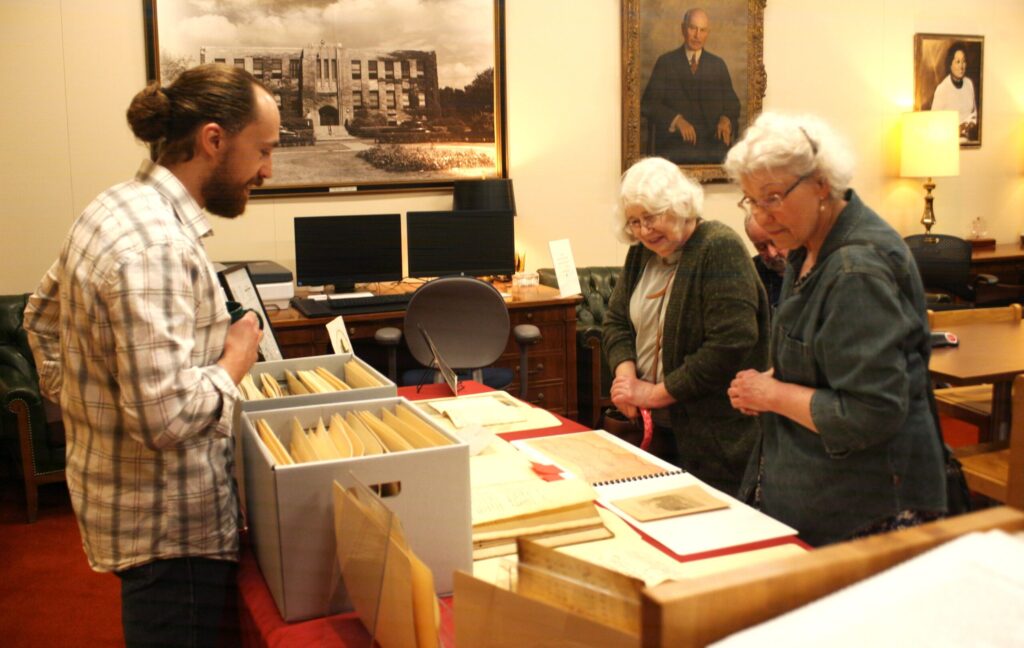
The IUN campus held Earle Fest April 24 to celebrate and publicly display the efforts of archivists Dan Hill and Mike White. White, who is graduating this spring from IUN, started an internship in January, and one month later began organizing the papers of Earle.
White considers Earle, who founded the communities of Hobart, Liverpool, and Lake Station, one of the foremost pioneers and builders of Lake County. A man who came to this country in 1835 to build brick homes in Philadelphia was an early developer of the county. He financed railroads; was an early county agent; justice of the peace; real estate agent; patron of the arts; and operated a grist mill.
Earle also never forgot his English roots. In 1869 he built Earle’s Retreat, an alms home, in Falmouth, England. Still in operation, the facility, renovated in 1989, is retirement housing with 21 living units.
As White recounted his work with the Earle collection, he originally had eight boxes of material, unprocessed and no accession information. White embarked on two months of inventory and eventually posted the material online. He wound up with more than 1,200 pieces of Earle material dating back to the mid-19th century.
“As a historian, this was just fun. It was a blast,” White said. “This is all real stuff here.”
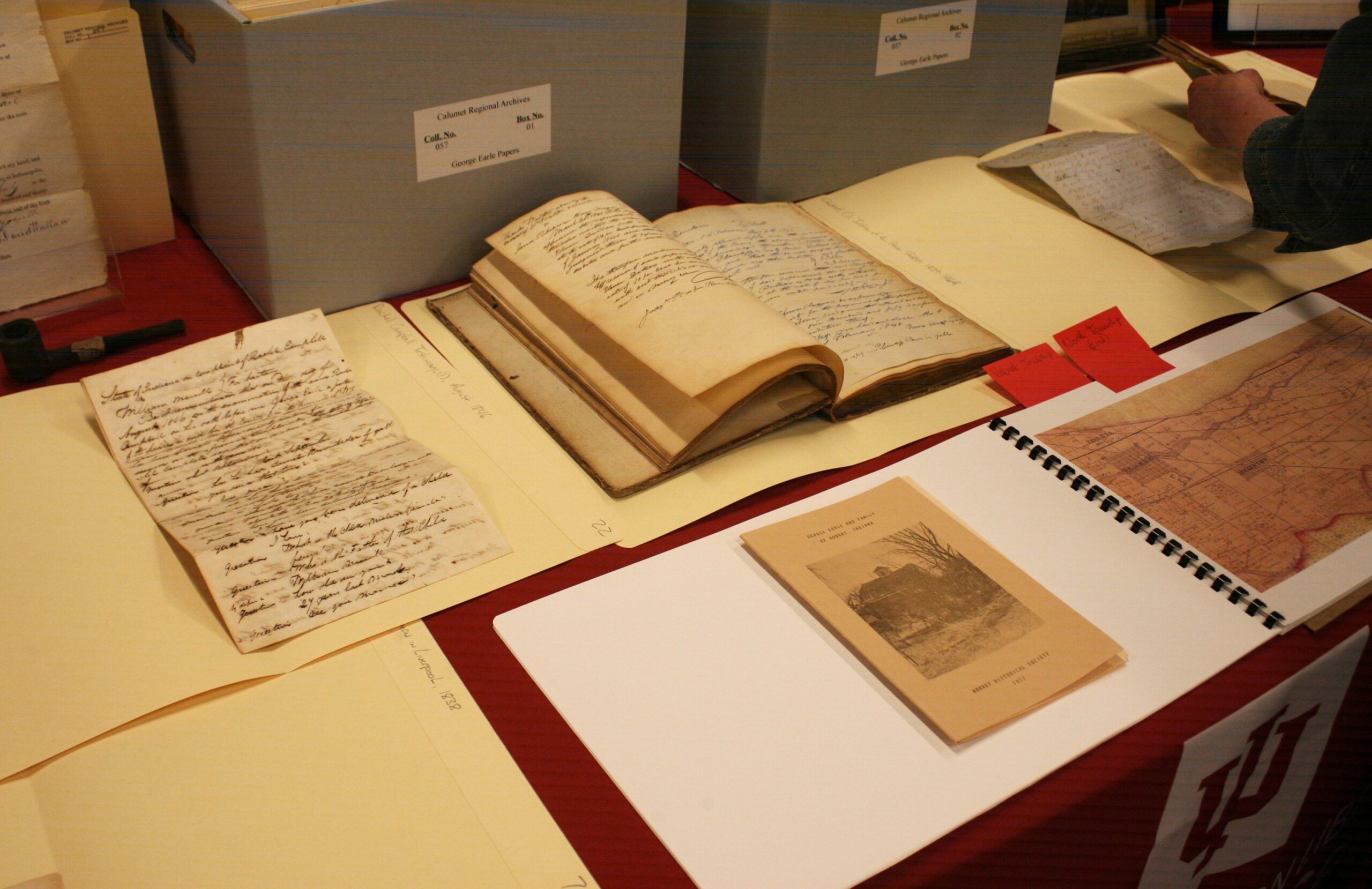
Among the items displayed: cash books, photographs, tavern license, maps, drawings, receipts, Earle’s pipe, workers’ time sheets, and justice of the peace documentation, including an eight-page letter from a woman accusing a prominent citizen of sexual assault.
Members of the Hobart Historical Society attended the program, held in the archives section on the third floor of the IUN library.
As Hill pointed out, IUN is the only IU regional campus with two archives, one of the university and the other of the region. The Gary site boasts more than 500 collections and more than 9,000 cubic feet of
materials.