Address
706 E 4th St
Hobart, IN 46342
Phone
219-942-0970
Hours
Monday to Friday: By Appointment
Saturday: 10AM - 12PM
Sunday: Closed

Address
706 E 4th St
Hobart, IN 46342
Phone
219-942-0970
Hours
Monday to Friday: By Appointment
Saturday: 10AM - 12PM
Sunday: Closed

Ever wonder where the Brickie nickname originated? Did you also know that Hobart’s bricks have a connection to a potential Catholic saint?
Hobart’s original Brickies were just that – bricks. Back when horsepower meant actual horses, brickmaking plants were very much a part of the local business landscape.
First, why are bricks so popular as building materials? From ancient Egyptian fortresses to castles of the Middle Ages, brick is an inexhaustible, earthy, and natural building material dating back to 7,000 BCE.
Brick is eco-friendly, durable, and offers permanence, strength, style, and stability. Hobart’s first brickmaking plant opened in 1860 and was located at 10 Michigan Avenue, the current site of Dr. Frey’s clinic. The clay needed to make bricks came from an area southwest of the Pennsylvania Railroad now occupied by the city’s sewage disposal plant.
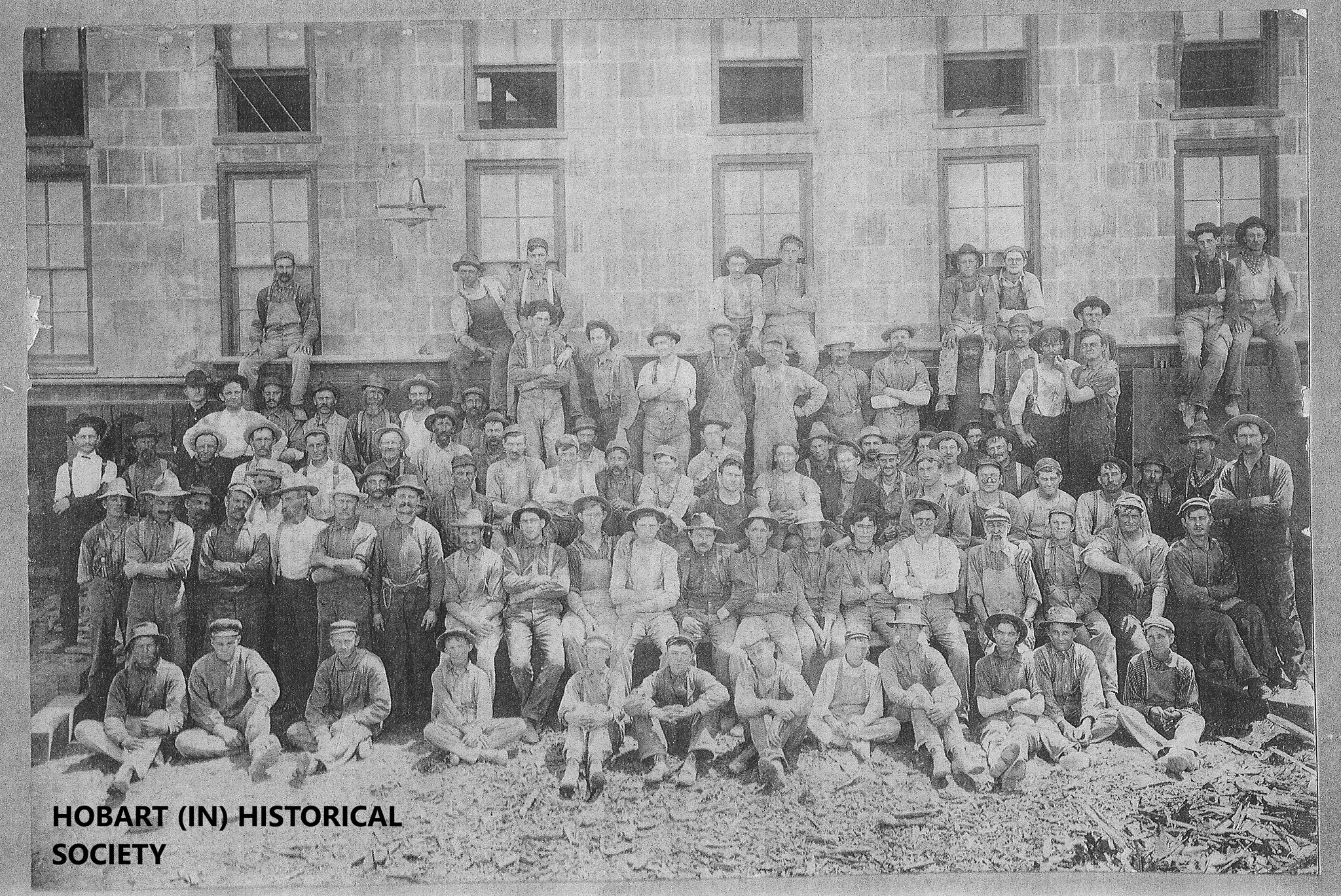
Following a series of owners, the plant was sold in 1887 to Otto Kulage of St. Louis, where he already owned and operated a brick plant. Upon his arrival in Hobart, Kulage purchased more land near the lakefront. His new large plant was called Kulage Brick Yards.
Judging from the land Kulage purchased, he had long-range plans to stay in Hobart. This expansion included a railroad track extension, tunnel, and pumping station. The plant also produced its own electricity and heat.
The brick yards became Hobart’s main industry, employing 50-55 men, the majority Hobart residents. Many boys went to work in the brick yards after graduating from eighth grade. The plant operated on a 10-hour-day schedule.
Starting salary was 8 cents an hour, with the highest monthly salary around $40. Loaders worked piece work at 35 cents per 1,000 bricks loaded, and it took three men to load. The plant’s daily output was limited to 36,000 bricks due to the shortage of kilns needed to dry the brick.
Otto Kulage was known for his generosity to religious and civic groups. He donated bricks for the building of Holy Angels Church and School in Gary in 1910 and one year later donated bricks for St. Bridget in Hobart. Other projects included the former Ss. Peter and Paul Church in Merrillville and St. Margaret Hospital in Hammond.
When Mother Maria Tauscher was looking to build an orphanage in East Chicago, the European-born nun received help from Kulage. His generosity led to the building of the Carmelite Home for Girls. Tauscher has since been beatified by the Roman Catholic Church and is one miracle away from being canonized a saint.
In 1916 Kulage sold the brick plant to a Chicago firm, which operated the plant until 1920, when it was dismantled and all the property was sold. Acreage along Lake Park Avenue was sold to the National Fireproofing Company, which had earlier taken over the terra cotta portion of the brick plant.
National Fireproofing rebuilt the plant in 1920. By then the company had plants in several states and Canada. Eventually the plant was sold and the name changed to Natco Corporation.
In later years, specifications for making tile had changed, and the clay produced in Hobart was no longer suitable for making brick and terra cotta. That hastened the plant’s departure from Hobart. At the time of its closing, the plant employed 60-70 men at an hourly pay rate of $1.99.
Natco had purchased the 147 acres along Lake Park Avenue previously owned by Kulage. All of Natco’s property was sold in 1966. Much of it was developed for residential purposes.
– Compiled by Clare Fleck and edited by Steve Euvino. Clare Fleck is the granddaughter Peter Fleck, Hobart’s first resident, who settled here in 1828. Steve Euvino is a board member with the Hobart Historical Society.